

Music
“Music is to the soul what words are to the mind.”
Intent
Our curriculum ensures that every child develops secure substantive knowledge of music - understanding its technical, constructive, and expressive elements - and the disciplinary knowledge needed to think and work like a musician. We aim for all pupils to leave the Federation confident in their musical ability, equipped with the skills to perform, compose, and listen critically. The curriculum is ambitious for all learners, including those with SEND and disadvantaged pupils, and provides access to a broad range of genres, traditions, and cultures, building cultural capital and fostering lifelong enjoyment of music.
Implementation
Music teaching follows a highly sequenced, Kodály-inspired approach, ensuring progression from EYFS to Year 6. In EYFS and Year 1, we use Jolly Music to introduce core musical concepts through singing games, movement, and listening activities. Where possible music lessons are delivered by an infant teacher who has completed the Jolly Music Beginners course. This playful yet structured approach develops pulse, rhythm, pitch awareness, and inner hearing, laying strong foundations for future musical learning. Pupils begin to use simple solfa (do, re, mi) and rhythmic patterns, supporting memory and vocabulary development.
In Years 2 – 4, the Kodály-inspired approach continues. Music lessons are planned and, where possible, delivered by our music leader, who has completed Level 2 of the BKA Certificate of Professional Practice in the Kodály Concept of Music Education. Our music leader also delivers CPD for non-specialist music teachers.
Singing is the gateway to musical understanding before applying concepts to instruments, listening, and composition. Pupils systematically build knowledge of pitch, rhythm, structure, and expressive elements, supported by explicit teaching of technical vocabulary and regular opportunities for retrieval to secure long-term memory.
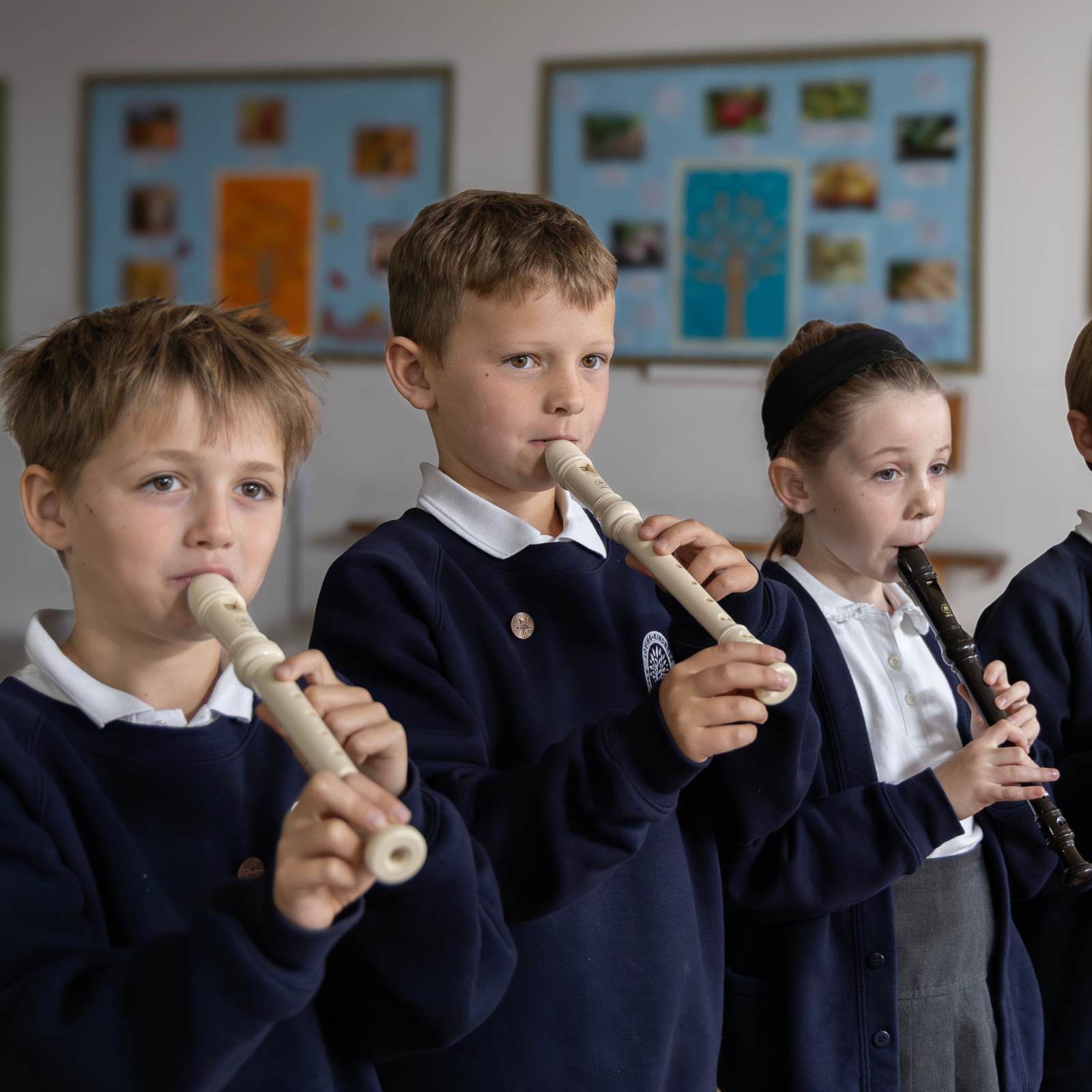
Whole-class instrumental learning in Year 3 (recorder) builds on prior musical foundations, this is built on in Year 4. In Years 5 and 6, pupils learn the ukulele in a structured programme that develops chord knowledge, strumming patterns, and ensemble playing, extending their understanding of harmony and accompaniment.
Singing is central to school life, with weekly assemblies and performances linked to collective worship themes. Beyond the classroom, pupils experience high-quality musical enrichment: live performances by professional musicians, opportunities to watch a full orchestra, and participation in events such as nativities, end-of-year productions, and commemorative services. Extra-curricular provision includes choir, ukulele, and recorder clubs, alongside small-group tuition in woodwind, brass, and strings through Hampshire Music Hub and band sessions via iRock.
Impact
By the end of Year 6, pupils will have developed a deep understanding of the interrelated dimensions of music and the ability to apply this knowledge creatively in performance and composition. They will listen with discrimination and critical awareness across a wide range of genres and traditions. Assessment evidence demonstrates progression and retention of knowledge, enabling pupils to leave with confidence, cultural awareness, and the foundation to continue their musical journey beyond primary school.