

Religious Education
Intent
Our Religious Education curriculum develops three kinds of knowledge identified in Ofsted’s research:
- Substantive knowledge – understanding core beliefs, practices, and concepts within Christianity and other principal religions represented in Great Britain.
- Disciplinary knowledge – learning to think and speak like a theologian, philosopher, and social scientist by asking questions, interpreting texts, and evaluating arguments.
- Personal knowledge – reflecting on pupils’ own experiences and values in relation to what they learn about religion and worldviews.
Through our approach to oracy, we encourage pupils learn to listen to others’ views - even when they differ from their own - and use these to think critically about their own perspectives while remaining open-minded and reflective. This approach fosters curiosity, respect, and the ability to make reasoned, informed judgements about religious and moral issues, supporting pupils’ spiritual, moral, social, and cultural development (SMSC) and preparing them for life in modern Britain.
Implementation
We follow Hampshire’s agreed syllabus: Living Difference IV and use Understanding Christianity as a core resource. All pupils study Christianity throughout, with additional religions introduced progressively:
- Hinduism in Key Stage 1
- Judaism in Lower Key Stage 2
- Islam in Upper Key Stage 2
- Buddhism referenced across the Federation
Four golden threads—special, love, community, and belonging—are woven through the curriculum. RE is taught through an enquiry-based approach using five steps:
- Communicate
- Apply
- Inquire
- Contextualise
- Evaluate
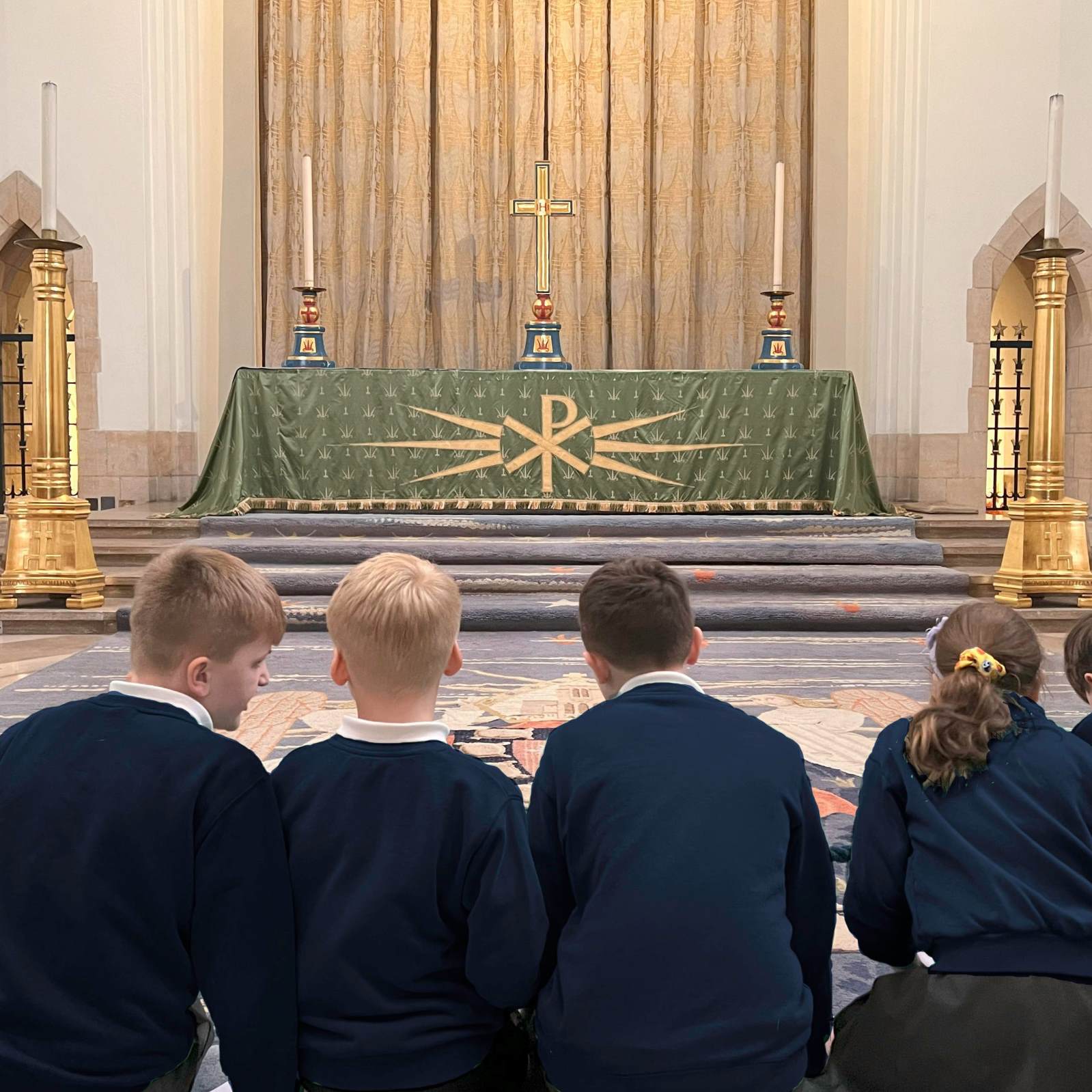
We explicitly teach tier 2 and tier 3 vocabulary and embed exploratory and presentational talk so pupils can reason, debate, and articulate ideas confidently. Inclusion is central, with adapted resources and personalised approaches for SEND learners. Technology enhances engagement and access through multimedia resources. Enrichment opportunities include trips to places of
worship and experiences that deepen understanding of faith in real-world contexts.
Impact
By the time pupils leave the Federation, they will:
- Have secure substantive knowledge of major world religions and their key concepts.
- Demonstrate disciplinary knowledge by thinking and speaking like a theologian—interpreting texts, evaluating arguments, and engaging in respectful dialogue.
- Develop personal knowledge, reflecting critically on their own beliefs while remaining open-minded and empathetic toward others.
Pupils will understand and value diversity, practise tolerance and mutual respect, and contribute positively to life in modern Britain. RE will have enriched their cultural capital and prepared them for future learning and citizenship.
Parents/carers have the right to withdraw their child from all or part of the RE curriculum. Please contact the school office if you wish to discuss this.